Market
The Market Is Favorable
A softening market is working in your favor, with more carrier appetite and more competition than we have seen in several years.
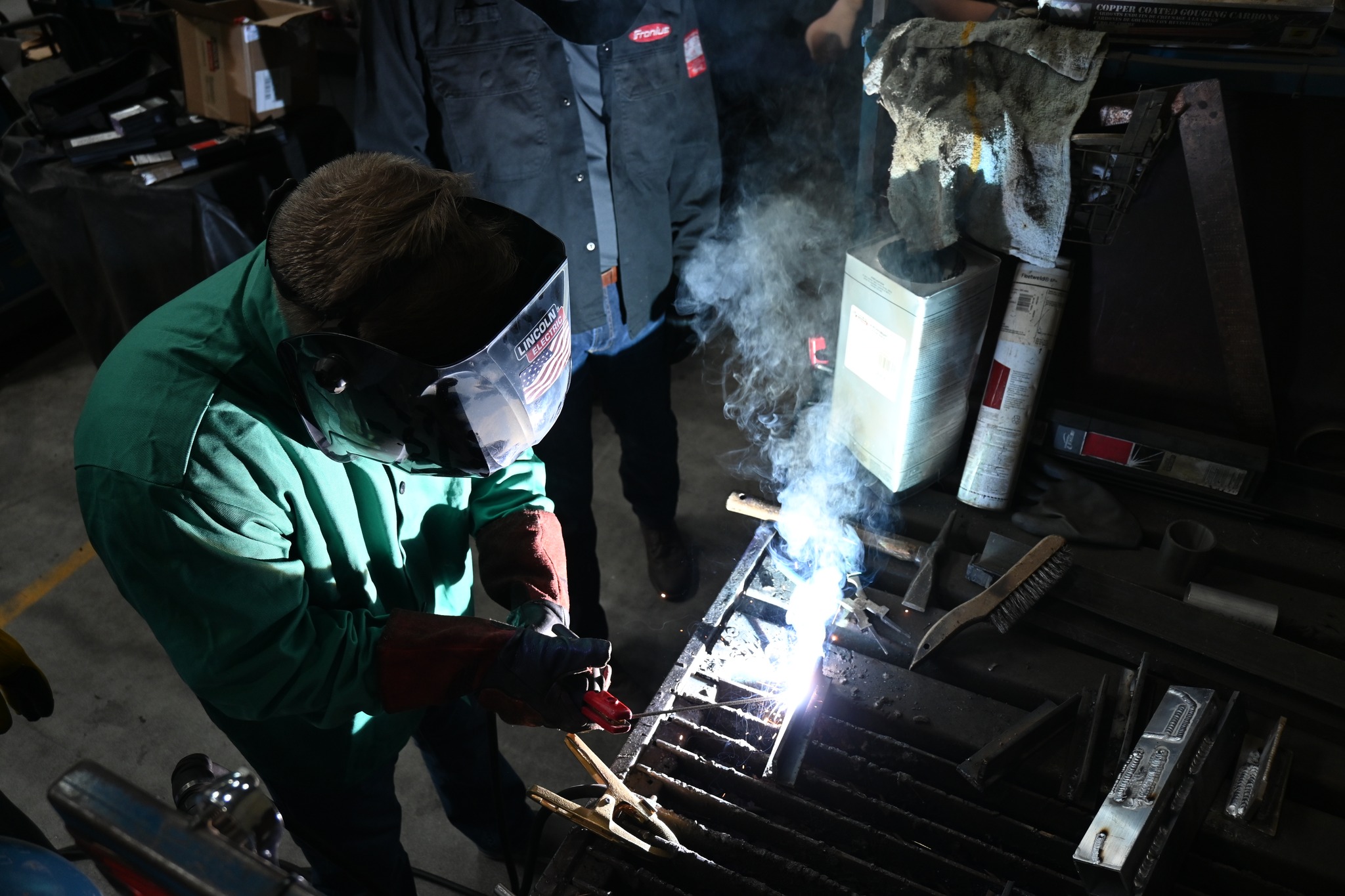
Team Haugen · HUB International Northwest
A decision review prepared for the leadership of Eugene Welders, doing business as Industrial Source. Where the market stands, what we accomplished, and what we recommend for the year ahead.


The Short Version
The headlines before the detail. Each point is unpacked in the sections that follow.
A softening market is working in your favor, with more carrier appetite and more competition than we have seen in several years.
Multiple carriers competed for this account rather than a single renewal quote. Competition is the lever that moves price and terms.
A dedicated underwriting site raised engagement and improved the quality of every conversation we had with carriers.
Traditional programs at several deductible levels, plus the captive options, were all put on the table and compared on the economics.
At current pricing, the traditional market delivers the strongest overall combination of price, coverage, and stability.
A captive may fit a future cycle. We will keep watching the economics and bring it back the moment the math supports it.
Bottom Line
Remain in the traditional market for the 2026 program, where competition and soft-market conditions are producing the best combination of price, coverage, and stability. Continue monitoring captive opportunities so that if the economics shift, you are ready to move.
The Work Behind the Result
A disciplined path from submission to recommendation, built to earn carrier attention and put competition to work for you.
We assembled a complete, accurate submission and the real story behind the numbers.
We published a dedicated site so underwriters could understand the real Eugene Welders.
We brought carriers to the table and walked them through the operation directly.
We used the competition we created to press on price, coverage, and terms.
We compared every viable structure and arrived at the recommendation in this presentation.
What Set This Account Apart
Most submissions look identical on an underwriter's desk. The same forms, the same loss runs, the same one-page summary. We refused to let Eugene Welders be one more of those.
We built a dedicated website that told underwriters who this company actually is, so the people pricing your risk understood the operation before they ever quoted it.
The Result
Clarity changed the conversation. Here is what the underwriting website produced in the market.
Carriers spent real time with the account instead of skimming a packet. They came to the table already understanding the operation.
Conversations moved past surface questions and into the controls, the culture, and the details that actually shape pricing.
More than one carrier wanted the account, which changed the balance of the negotiation in your favor.
Competition gave us room to press on price, coverage, and terms rather than accepting a single take-it-or-leave-it quote.
The Talking Point
The objective was simple: create competition. Competition is what drives results, and this account had plenty of it.
Reading the Cycle
The insurance market moves in cycles. Right now, the cycle is on your side.
Carriers are actively looking to write good accounts, and Eugene Welders is exactly the kind of risk they want.
There is room in the market, which means options instead of a single path to renewal.
Rate pressure is on your side, and carriers are sharpening pricing to win business.
Soft conditions open the door to better terms, not just better price.
Carriers are willing to structure deductibles around how you actually want to manage risk.
Structures on the Table
We modeled the traditional program at several deductible levels so you could see the full range of trade-offs, not just one quote.
The carrier carries more of the risk. Higher premium, but the most predictable cost and the least exposure to a bad year.
A balanced position. You retain a measured amount of risk in exchange for premium savings, with manageable cash-flow impact.
You retain more risk for the lowest premium. Strongest savings when claims stay low, more variability when they do not.
What We Discussed at Each Level
Premium impact, retained risk, cash flow, and claim frequency. The point of the exercise was simple: explore every lever before settling on a recommendation. Specific figures for each structure are reviewed live from the proposal.
What We Recommend
A traditional program placed with a carrier team that competed for the account and earned it on price, coverage, and strength.


The pricing reflects the competition we created, not a single uncontested renewal number.
These are markets we work with directly, which means responsiveness when it matters.
A structure built to hold up year over year, not just to win this one renewal.
Carriers with the balance sheet to stand behind the program and pay claims.
Room to adjust deductible and structure as your operation and the market evolve.
The specific premium, limits, and deductible for the recommended program are reviewed live from the proposal document. No figures are printed here.
An Honest Comparison
Two legitimate ways to finance risk. The right answer depends on the economics in front of you, not on which one is in fashion.
In a traditional program, you pay a premium and the carrier takes on the risk. It is the model most businesses run on, and for good reason.
In a captive, you join with other businesses to retain and finance more of your own risk. Done in the right market, it can reward good loss experience. It also asks more of you.
Pressure-Testing the Captive
Before recommending traditional, we put the captive option through the questions that actually decide whether it pays off.
A captive needs real premium volume to generate a meaningful advantage. At this account's current size, the savings a captive could produce don't yet clear the bar that justifies the structure.
Retaining more risk pays off most when traditional pricing is punishing. Today it's the opposite, competition and soft-market conditions mean the traditional gap a captive would need to beat is already narrow.
A captive doesn't just ask you to fund losses, it ties up capital and typically requires a letter of credit as collateral. That's capital removed from the business and borrowing capacity constrained, all to chase a savings gap that today is thin.
Eugene Welders' strength is optionality, the ability to acquire outside the current vertical, keep cash working, and move when opportunity appears. A captive narrows all three, locking capital and tying acquisition flexibility to the group's risk profile.
Dollars accumulated in a captive sit as restricted collateral, not as a freely valued asset. In a future sale or generational transition, they typically don't earn the business's valuation multiple, a structural drag that has nothing to do with where the market sits.
A captive's results are only as stable as its group. A heterogeneous, mixed-industry pool spreads you across risks you don't control, and vetting that group is a project in itself, before any savings are realized.
The Conclusion
At today's pricing, every answer points the same direction. Traditional coverage is the better overall value for Eugene Welders right now, and the captive stays on the table for the day the economics, the market, and your plans line up differently.
Separation vs Sharing
Current Separate Silo Structure
Eugene Welders
Total available tower: $11M
National Fire
Total available tower: $11M
Combined Shared Tower Structure
Total shared tower: $21M
The Recommendation
At the pricing we are seeing for the two separate $10M towers, our recommendation is to preserve the silo structure. It creates cleaner separation, protects each entity independently, and avoids tying the loss experience of Eugene Welders and National Fire together when we do not need to. The goal is not just buying limit. The goal is buying limit in the structure that best protects both companies.
Keeping the Door Open
We are not anti-captive. We are pro-economics. If the math changes, our recommendation changes.
If traditional pricing climbs and capacity tightens, retaining more risk becomes more attractive.
As the account grows, the premium volume a captive needs to work becomes easier to reach.
If strong loss experience could be turned into returned underwriting profit, that shifts the calculus.
If the projected savings hold up across several years rather than one, the commitment makes more sense.
The moment the captive math clearly beats traditional, we bring it straight back to you.
Diligence Before You Join
If a captive ever makes sense, the group you join matters as much as the structure itself. These are the questions to ask first.
In a group captive, your results are tied to the other members. You need to know who they are.
A group concentrated in high-hazard industries carries a different risk profile than a diversified one.
The group's history is a window into how stable your shared results are likely to be.
You want clear reporting, fair allocation, and a seat at the table, not a black box.
Leaving a captive is rarely instant. You need to understand the runoff and the cost of getting out.
Capital committed to a captive is capital not working elsewhere in your business.
The Talking Point
Captives can be excellent tools. The quality of the group matters as much as the structure itself.
The Work Does Not Stop
This recommendation is based on current facts. We never stop evaluating, and we will bring you the next opportunity the moment the economics support it.
We track where the cycle is heading so you are never caught flat-footed by a turn.
If a captive starts to make economic sense for Eugene Welders, you will hear it from us first.
We revisit your retained-risk position as your operation and the market change.
Traditional, captive, or something in between, we keep every option on the table.
Competition is not a one-time event. We keep the market working for you every renewal.
Let's Talk It Through
Thank you for your time and your trust. The team behind this work is here to answer anything, and to keep earning the relationship.

SVP, Commercial Lines / Team Haugen Lead

SVP, Commercial Insurance

Associate Advisor, Commercial Lines
Associate Advisor, Commercial Lines
Client Advisor, Legal/Contracts

CL Sr. Account Manager
CL Account Manager II

CL Account Manager II

CL Account Manager II

Regional VP, Claims
Senior Claims Advocate (AIC, CRIS)
Claims
Team Haugen · HUB International Northwest · Eugene, Oregon